
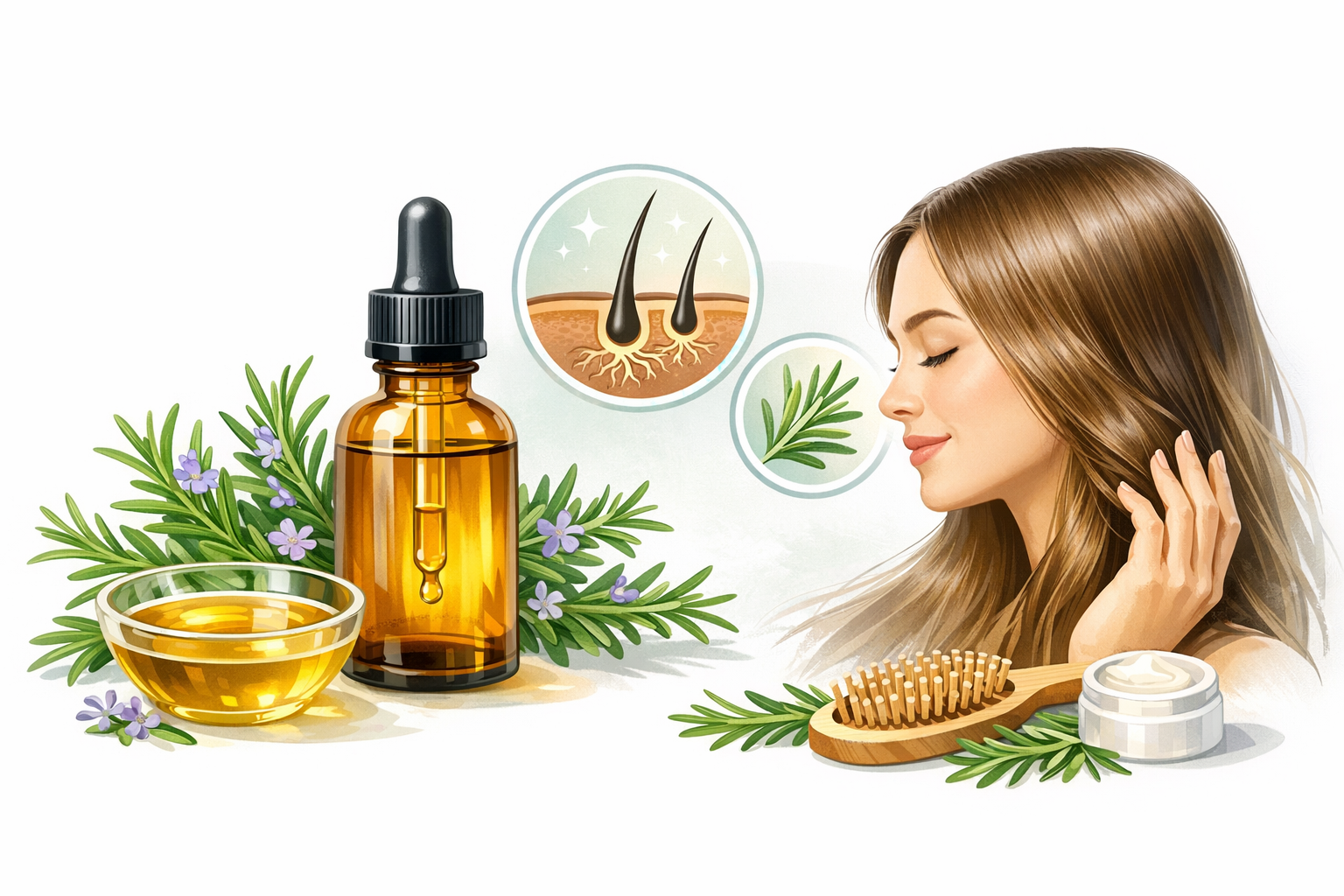
Rosemary Oil for Hair Growth: Benefits, How to Use, and What to Expect
Introduction
Curious about rosemary oil for hair growth? This time-tested botanical has surged in popularity thanks to social buzz and emerging scientific interest. While no single ingredient can transform hair overnight, rosemary oil may support a healthier scalp environment and reduce shedding, helping hair look fuller over time. In this guide, you’ll learn how rosemary oil works, how to use it correctly, what kind of results to expect, and safety tips to get the most from your routine.
What Is Rosemary Oil and Why It May Help Hair Grow
Rosemary (Rosmarinus officinalis, now Salvia rosmarinus) is an aromatic evergreen herb rich in antioxidant and anti-inflammatory compounds. Rosemary essential oil is steam-distilled from the leaves and is highly concentrated. When people talk about rosemary oil for hair growth, they typically mean this essential oil diluted in a carrier oil or formulated into hair products.
How It May Support the Hair Growth Cycle
Hair growth follows a cycle of growth (anagen), transition (catagen), rest (telogen), and shedding (exogen). Several properties of rosemary oil may help maintain a favorable environment for the anagen phase:
- Scalp circulation support: Scalp massage with rosemary oil can help stimulate local circulation, which may support follicle health.
- Antioxidant defense: Rosmarinic acid and carnosic acid help neutralize oxidative stress, which is linked to follicle miniaturization.
- Anti-inflammatory action: A calmer, less irritated scalp is more conducive to steady hair growth.
- Balancing sebum: Rosemary’s astringent nature may help keep scalp oils balanced, reducing buildup that can clog follicles.
What the Research Says
Early studies suggest rosemary oil can be comparable to standard options for certain types of hair thinning when used consistently. For example, small clinical trials have observed improvements in hair count and reduced scalp itching versus placebo, and one head-to-head study found similar outcomes between rosemary oil and 2% minoxidil over several months. While more large-scale research is needed, these findings support the practical use of rosemary oil for hair growth as part of a broader hair-care plan.
How to Use Rosemary Oil for Hair Growth
Because rosemary essential oil is potent, proper dilution and consistent application are crucial. Below are safe, effective ways to add it to your routine.
Choose the Right Dilution
Always dilute rosemary essential oil in a carrier oil before applying it to your scalp. Aim for a 1–2% dilution to start:
- 1% dilution: 6 drops rosemary essential oil per 1 tablespoon (15 mL) of carrier oil.
- 2% dilution: 12 drops rosemary essential oil per 1 tablespoon (15 mL) of carrier oil.
Good carrier oils include jojoba (closest to natural scalp sebum), fractionated coconut (lightweight), grapeseed (fast-absorbing), and sweet almond (nourishing). If you have a sensitive scalp, begin at 0.5–1% dilution and increase only if well tolerated.
Application Methods
- Scalp massage oil: Part your hair and apply small amounts directly to the scalp with a dropper or fingertips. Massage gently for 3–5 minutes to enhance circulation.
- Pre-shampoo treatment: Leave the diluted oil on the scalp for 30–60 minutes before washing. This helps lift buildup and condition the scalp.
- Leave-in scalp serum: Use a lightweight 1% dilution sparingly on the scalp after washing. Do not saturate; focus on problem areas.
- Shampoo/conditioner boost: Add 1–2 drops of rosemary essential oil per teaspoon of product in your palm just before use. Avoid pre-mixing large batches to preserve stability.
Frequency and Timeline
For most people, applying rosemary oil 3–4 times per week is a good balance between consistency and scalp comfort. As with any hair routine, patience is key:
- Weeks 1–4: Focus on tolerance and technique. You may notice less itchiness or flaking if you had scalp irritation.
- Weeks 6–12: Early signs can include reduced shedding and a softer, healthier-feeling scalp.
- Months 3–6: Many users observe fuller-looking hair at the roots and new baby hairs along the hairline. Individual results vary.
Continue use to maintain benefits. If irritation occurs, reduce frequency or dilution, or pause and patch test again.
Practical Tips to Maximize Results
- Patch test: Apply a small amount of diluted oil behind the ear or on the inner arm for 24 hours before first use.
- Be consistent: Regular use matters more than high concentration. Avoid exceeding 2% dilution on the scalp.
- Massage matters: Gentle, circular motions with your fingertips for a few minutes improve product distribution and relaxation.
- Keep the scalp clean: Wash regularly to remove buildup from stylers, dry shampoo, and hard water minerals.
- Complementary habits: Prioritize protein, iron, zinc, omega-3s, and a balanced diet; manage stress and sleep; avoid tight styles and harsh heat.
- Pair wisely: Rosemary oil can complement caffeine serums, niacinamide scalp tonics, or gentle exfoliants (like salicylic acid) on alternating days.
- Track progress: Take monthly photos in consistent lighting and parting to assess changes objectively.
Potential Side Effects and Who Should Avoid It
Rosemary oil is generally well tolerated when diluted properly, but essential oils can irritate sensitive skin. Watch for redness, burning, or itching.
- Sensitivity: If your scalp is reactive or you have eczema, start at 0.5–1% dilution and limit contact time. Discontinue if irritation persists.
- Allergies: Avoid use if you’re allergic to rosemary or Lamiaceae family herbs (like basil, mint, sage).
- Pregnancy and nursing: Consult your healthcare provider before using essential oils on the scalp.
- Medical conditions and medications: If you have epilepsy, uncontrolled hypertension, or are on topical prescriptions, speak with a clinician first.
- Eyes and mucous membranes: Keep away from eyes; rinse with plenty of water and a gentle cleanser if contact occurs.
How to Choose Quality Rosemary Oil
Not all products marketed as rosemary oil for hair growth are created equal. Look for:
- Botanical name on label: Salvia rosmarinus/Rosmarinus officinalis.
- 100% pure essential oil: No synthetic fragrance or undisclosed fillers.
- Dark glass bottle with dropper: Protects against light and makes dosing easier.
- GC/MS-tested brands: Offer transparency about purity and contaminants.
- Freshness: Essential oils oxidize; buy smaller bottles and store cool, dark, and tightly sealed.
Note: “Rosemary-scented” products may not deliver the same benefits unless they contain effective levels of genuine essential oil or standardized extracts.
Simple DIY Recipes
Everyday Scalp Massage Oil (1% Dilution)
- 1 tablespoon (15 mL) jojoba oil
- 6 drops rosemary essential oil
Mix in a dark glass bottle. Apply a few drops to the scalp, massage for 3–5 minutes, and leave on for 30–60 minutes before shampooing, 3 times per week.
Lightweight Leave-In (0.5–1% Dilution)
- 2 tablespoons (30 mL) fractionated coconut oil
- 6–12 drops rosemary essential oil
Use sparingly on the scalp after washing; avoid saturating hair lengths. Start with 0.5% if you’re sensitive.
Shampoo Booster (Single-Use)
- 1 teaspoon of your regular shampoo
- 1–2 drops rosemary essential oil
Combine in your palm, lather, and focus on the scalp for 60 seconds before rinsing.
Frequently Asked Questions
Can rosemary oil regrow hair in bald spots?
It may support healthier follicles and reduce shedding, but it’s unlikely to reverse long-standing baldness on its own. For advanced thinning, consult a dermatologist to discuss a comprehensive plan that may include medical treatments.
Is rosemary oil better than minoxidil?
Some small studies suggest comparable results in certain cases, but minoxidil has more robust evidence. Many people use rosemary oil alongside or when seeking a natural-leaning routine. Talk to a professional before combining treatments.
Will it make my hair greasy?
Using a light carrier oil, applying small amounts, and focusing on the scalp (not lengths) helps avoid greasiness. Pre-shampoo treatments are ideal if your hair is fine or oil-prone.
How long until I see results?
Expect subtle changes around 8–12 weeks, with visible improvements more likely by 3–6 months of consistent use. Take monthly photos to track progress.
Can I use rosemary-infused oil instead of essential oil?
Herbal infusions are gentler and less concentrated. They may be suitable for very sensitive scalps, though effects could be milder than with essential oil at proper dilutions.
Conclusion
Using rosemary oil for hair growth is a practical, evidence-informed way to support scalp health and fuller-looking hair. The keys are safe dilution, consistent application, and realistic expectations over several months. Paired with healthy hair habits—like gentle styling, balanced nutrition, and stress management—rosemary oil can be a valuable ally in your hair-care routine. If you have significant shedding or sudden thinning, consult a medical professional to rule out underlying causes and create a tailored plan.