
Belly Fat Causes: What Really Drives Abdominal Weight Gain
📌 Introduction
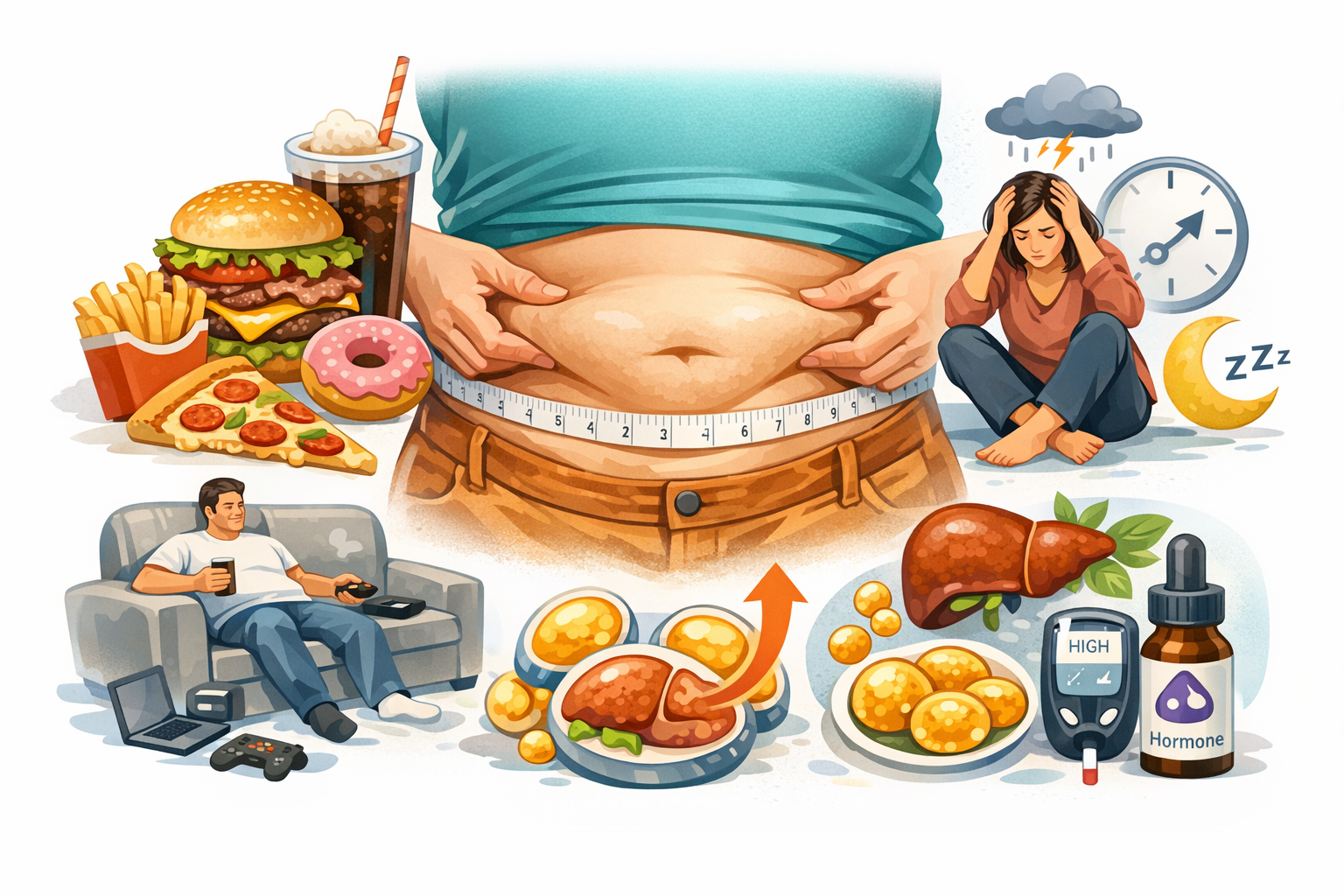
Belly fat causes are more than just eating too much. While extra calories matter, the type of food you eat, your hormones, stress levels, age, sleep quality, and daily movement patterns all influence how your body stores fat around the midsection. Understanding the root drivers behind abdominal fat gain helps you target changes that actually work—especially for reducing harmful visceral fat that surrounds your organs.
This guide breaks down the science of belly fat causes and offers practical, evidence-based strategies to address them. You will learn the difference between subcutaneous and visceral fat, why some bodies are more prone to storing fat centrally, and what you can do today to support a healthier waistline and better metabolic health.
🔍 What Is Belly Fat? Subcutaneous vs. Visceral
⭐ Subcutaneous fat
⭐ This is the soft pinchable fat just under the skin.
⭐ It is more visible but metabolically less risky than deep belly fat.
⭐ Subcutaneous fat can still affect how you feel and move, but it is not the main driver of metabolic disease.
⭐ Visceral fat
⭐ Visceral fat sits deeper inside the abdomen, surrounding organs like the liver, pancreas, and intestines.
⭐ It is hormonally active and releases inflammatory molecules that raise the risk of insulin resistance, type 2 diabetes, fatty liver disease, and cardiovascular issues.
⭐ Reducing visceral fat is a key health priority, even if the scale does not change dramatically.
🔥 Top Belly Fat Causes
⭐ 1. Calorie surplus and ultra-processed foods
⭐ Consistently consuming more calories than you burn leads to fat gain, but not all calories behave the same.
⭐ Ultra-processed foods—high in refined carbs, added sugars, and industrial fats—are easy to overeat, spike blood sugar, and dampen satiety signals.
⭐ These foods also alter gut hormones, making you hungrier later.
⭐ Frequent sugary drinks and desserts raise insulin, encouraging fat storage around the abdomen.
⭐ Low-fiber, highly refined foods digest quickly, causing energy crashes and cravings.
⭐ Large portion sizes and grazing extend eating windows and increase total intake.
⭐ 2. Hormonal imbalances
⭐ Hormones strongly influence where your body stores fat, and certain changes can favor abdominal fat.
⭐ Insulin: Chronically high insulin from excess refined carbs and frequent snacking signals the body to store fat centrally.
⭐ Cortisol: Ongoing stress and poor sleep boost cortisol, which promotes fat deposition around the midsection.
⭐ Sex hormones: Falling estrogen during menopause and lowered testosterone in aging men can shift fat storage toward the abdomen.
⭐ 3. Genetics and age
⭐ Genes help determine your fat distribution pattern.
⭐ As you age, muscle mass tends to decline, basal metabolic rate slows, and hormonal changes tilt storage toward the belly—even if your weight remains similar.
⭐ 4. Sedentary lifestyle and low NEAT
⭐ NEAT (non-exercise activity thermogenesis) includes all the calories you burn outside of formal workouts—walking, standing, fidgeting, chores.
⭐ Modern life slashes NEAT with long sitting hours, driving, and screen time, reducing energy expenditure and encouraging belly fat accumulation.
⭐ 5. Sleep deprivation and circadian disruption
⭐ Short sleep and irregular schedules raise hunger hormones (ghrelin), reduce satiety hormones (leptin), and increase cravings for high-calorie foods.
⭐ Late-night eating and shift work can also disrupt insulin sensitivity and promote visceral fat gain.
⭐ 6. Chronic stress and mental health
⭐ Stress changes eating behavior and physiology.
⭐ Emotional eating, higher cortisol, and sympathetic nervous system activation make central fat gain more likely.
⭐ Anxiety and depression can also reduce motivation to move and cook, compounding the problem.
⭐ 7. Alcohol and liquid calories
⭐ Alcohol provides empty calories, reduces inhibitions around food, and can impair sleep quality.
⭐ Sugary cocktails and beer add to carb loads, tipping energy balance and worsening belly fat storage.
⭐ 8. Gut microbiome and inflammation
⭐ Low-fiber diets, certain additives, and limited plant diversity can harm gut bacteria.
⭐ An imbalanced microbiome may influence energy extraction from food, inflammation, and insulin sensitivity—factors linked to abdominal fat.
⭐ 9. Medications and medical conditions
⭐ Some medications (like certain antidepressants, antipsychotics, steroids, and insulin or sulfonylureas for diabetes) can promote weight gain.
⭐ Health conditions including hypothyroidism, Cushing’s syndrome, and PCOS are also associated with central fat accumulation.
⭐ Always consult a healthcare professional before changing any medication.
⚠️ Health Risks Linked to Belly Fat
⭐ Insulin resistance and type 2 diabetes
⭐ High blood pressure and atherosclerosis
⭐ Nonalcoholic fatty liver disease
⭐ Adverse lipid profile: high triglycerides, low HDL
⭐ Systemic inflammation and metabolic syndrome
⭐ Sleep apnea and reduced cardiorespiratory fitness
💪 How to Address the Root Belly Fat Causes
⭐ Prioritize fiber-rich, minimally processed foods
⭐ Build meals around lean proteins, colorful vegetables, legumes, whole grains, fruit, nuts, and seeds.
⭐ Aim for 25–40 grams of fiber per day to improve satiety, stabilize blood sugar, and support a healthy microbiome.
⭐ Swap refined carbs for complex carbs: oats instead of sugary cereal, brown rice or quinoa instead of white rice, whole fruit instead of juice.
⭐ Choose healthy fats (olive oil, avocado, fatty fish) that support satiety and heart health.
⭐ Balance your plate and your eating window
⭐ Use a simple template: half non-starchy vegetables, a quarter protein, a quarter high-fiber carbs, plus a thumb of healthy fat.
⭐ Consider a consistent eating window that fits your lifestyle to curb late-night snacking and regulate appetite.
⭐ Front-load protein and fiber earlier in the day to reduce cravings and improve energy.
⭐ Manage insulin and cortisol through smart habits
⭐ Pair carbs with protein or fat to blunt blood sugar spikes.
⭐ Eat slowly and avoid constant grazing to give insulin levels time to fall between meals.
⭐ Practice stress reduction daily: brief breathwork, a walk after meals 🚶, or 5–10 minutes of mindfulness.
⭐ Move more throughout the day (boost NEAT)
⭐ Set a step target that challenges you—7,000 to 10,000 steps works well for many people.
⭐ Stand or stroll during calls, take the stairs, park farther away, and schedule brief movement breaks each hour.
⭐ Do a 10-minute walk after meals to improve post-meal blood sugar and aid digestion.
⭐ Build and protect muscle with strength training
⭐ Lift weights or do resistance training 2–4 times per week focusing on major muscle groups.
⭐ Include compound moves—squats, deadlifts, rows, presses—to stimulate more muscle and metabolic demand.
⭐ Consider short intervals or HIIT 1–2 times per week if appropriate for your fitness level to target visceral fat.
⭐ Sleep for 7–9 hours and anchor your body clock
⭐ Keep consistent bed and wake times, even on weekends.
⭐ Dim lights at night and get bright outdoor light within an hour of waking to reinforce your circadian rhythm.
⭐ Limit caffeine after midday and reduce evening screen time to improve sleep quality 😴.
⭐ Set boundaries with alcohol and liquid calories
⭐ Cap intake to moderate levels or skip most days; alternate with water or seltzer.
⭐ Choose lower-sugar options and avoid high-calorie mixers.
⭐ Be mindful of appetite rebound after drinking.
⭐ Support your microbiome
⭐ Eat a variety of plant foods weekly—aim for 20–30 different fruits, vegetables, legumes, whole grains, herbs, and spices.
⭐ Include fermented foods like yogurt, kefir, sauerkraut, kimchi, and tempeh if tolerated.
⭐ Limit ultra-processed foods and excess added sugars that may disrupt gut balance.
⭐ Review meds and screen for underlying issues
⭐ If you suspect a medication contributes to weight gain, discuss alternatives with your clinician.
⭐ Consider screening for thyroid dysfunction, PCOS, sleep apnea, or other conditions if symptoms suggest a problem.
⭐ Personalized guidance from a registered dietitian or healthcare professional can refine your plan.
👉 ⭐ Best weight loss supplement
💡 Practical Tips to Make Changes Stick
⭐ Start small: pick one nutrition change, one sleep habit, and one movement target to focus on for two weeks.
⭐ Track the basics: steps, protein intake, fiber, bedtime, and alcohol to spot patterns that influence belly fat causes.
⭐ Prep environments: keep high-fiber snacks visible, place a water bottle on your desk, and set reminders for movement breaks.
⭐ Use routines: schedule strength sessions like appointments and pair new habits with existing ones (walk after lunch, stretch after brushing teeth).
⭐ Measure progress broadly: waist circumference, how clothes fit, energy levels, sleep quality—not just the scale.
🏆 Conclusion
Belly fat causes are multifactorial—diet quality, hormones, stress, age, sleep, genetics, and everyday movement all play a role. The good news is that many of these drivers are modifiable with practical, sustainable changes. Center your meals around fiber and protein, move more throughout the day, lift weights to protect muscle, prioritize sleep, and manage stress. These steps steadily improve insulin sensitivity, lower cortisol, and shift your body away from storing fat around the abdomen. By addressing the root causes rather than chasing quick fixes, you can reduce visceral fat, strengthen your metabolic health, and feel better in your body for the long term.

Vishal Verma
Vishal Verma is a health blogger and founder of NutriActive.org. He specializes in topics like fatty liver, weight loss, nutrition, and natural remedies. His goal is to provide simple, research-based health information to help people improve their lifestyle and overall well-being.